.avif)

$26,138 is the average midrange bathroom remodel, and $81,612 is the average upscale remodel, so the answer isn't one number at all, it's a stack of line items that can push a $15,000 project past $40,000 once the layout, tile, and fixtures settle in. In practice, labor usually takes 40%–65% of the total budget, and that's why the quote on the kitchen table can look tidy right up until the walls open and the work starts.
At Jennifer Gilmer Kitchen & Bath, we see that pattern all the time in Washington DC, Maryland, and Virginia. The homeowners who stay calm are the ones who understand where the money goes before they choose the vanity finish or the tile pattern.
Table of Contents
- Older homes usually carry more unknowns
- Newer construction can simplify the math
- Local rules and approvals still matter
Where the Bathroom Budget Actually Goes
Start with the stack behind the quote, not the total at the bottom. Two bids can be thousands apart because one includes demolition, waterproofing, permit work, and rough-ins, while the other assumes the room stays mostly intact. That is the line between a cosmetic update and a bathroom that is rebuilt.
The visible pieces, tile, vanity, faucet, mirror, get the attention because they are easy to picture. The budget usually goes harder into the work you never see, rough carpentry, plumbing, electrical, waterproofing, and substrate repair, because those pieces decide whether the room holds up over time. Published cost guides show the same pattern, and a useful bathroom remodel cost per square foot guide makes the point clear, scope and finish level push the number around fast. A broader cost guide puts typical remodels in a wide range and shows how quickly upscale projects move past a simple refresh. If your goal is to save on your bathroom renovation, protect the existing structure and spend carefully on the finishes that matter.
In DC-area projects, I am direct about this. If a homeowner says, “I just want it to feel fresh,” the budget can stay disciplined. If the request becomes, “We should move the shower, enlarge the vanity, and rework the lighting,” the project is no longer a refresh. It is a rebuild with decorating on top.
Practical rule: Keep the existing plumbing footprint if you want the budget to behave. The minute fixtures move, the quote stops being about finishes and starts being about trades.
For a regional firm like Jennifer Gilmer Kitchen & Bath, that distinction shapes the job from concept through installation. The room's bones set the budget first, the finishes come second, and pretending otherwise only sets the project up for disappointment later.
The Line Items Behind Every Bathroom Renovation
A good bathroom renovation cost breakdown reads like a project plan, not a shopping list. Homeowners need to see the categories, because that's where proposal comparisons become useful. A vanity can be affordable, but if the room needs new rough plumbing, a custom shower build, and permit coordination, the total tells a very different story.
Typical Bathroom Renovation Line Items
| Line Item | Share of Budget | What It Includes |
|---|---|---|
| Demolition and disposal | Smaller on a cosmetic job, larger on a gut remodel | Tear-out, hauling, debris removal, and protecting adjacent rooms |
| Design fees | Varies by scope | Planning, drawings, selections, space coordination, and specification management |
| Permits and inspections | Usually a modest share, but not optional when work changes systems | Application work, review time, and required inspections |
| Rough carpentry | Grows with layout changes | Framing adjustments, blocking, subfloor repair, and wall preparation |
| Plumbing | One of the biggest swing items | Drain and supply modifications, fixture relocation, and trim installation |
| Electrical | Can be light or substantial | New circuits, lighting placement, switches, outlets, and code updates |
| Waterproofing | Never worth skimping on | Shower pan work, membranes, backer board prep, and leak protection |
| Tile and stone | Highly variable | Wall tile, floor tile, shower surfaces, trim pieces, grout, and setting materials |
| Cabinetry and vanities | Depends on stock, semi-custom, or custom | Vanity cabinets, drawers, integrated storage, and finish details |
| Countertops | Scope-driven | Stone or engineered tops, sink cutouts, and edge treatment |
| Plumbing fixtures | Easy to overspend on | Faucets, shower trim, tub fillers, drains, and accessories |
| Lighting and ventilation | Often underestimated | Vanity lights, recessed lighting, fans, and moisture control |
| Hardware and paint | Smaller but visible | Pulls, hooks, mirrors, paint, and final detailing |
| Contingency | Critical | A reserve for hidden conditions and change orders |
A useful outside reference for homeowners trying to save on selections is save on your bathroom renovation, especially if you're comparing where to spend and where to hold the line. Use it for ideas, but keep your own proposal local, because labor and code requirements change the math fast.
The biggest mistake I see is treating every line item as equal. It's not equal. Tile can be beautiful and still be a smaller budget driver than what's behind it. A stock vanity can look polished, while custom cabinetry can absorb money quickly if the room is tight and storage needs are specific.
Designer note: Budget for the room you're building, not the photos you saved. Those are rarely the same project.
Why Labor and Rough-In Drive the Cost
Labor looks expensive because bathroom work is sequential. One trade finishes before the next can start, and when the order slips, the whole room slips with it. That is why labor and rough-in often look minor in a sketch, then become the largest numbers on the page once the estimate is built.
The sequence that moves the budget
Demolition starts the job. It exposes what the room is really made of, and older bathrooms often reveal surprises the homeowner never saw in the showroom. Once the room is open, plumbing and electrical set the ceiling for the project. If the toilet, shower, or vanity is moving, the trades have to reroute systems cleanly, and that work cannot be rushed without creating callback problems.
Waterproofing sits in the middle of the schedule and deserves real respect. It is the quiet layer that protects everything else, especially in showers and tub surrounds. Tile follows waterproofing, and tile work is labor-intensive because every cut, slope, niche, and transition has to be handled in order. A shower with detailed tile work can look modest on paper and still carry a serious labor load.
The cleanest way to protect the budget is to leave the plumbing footprint alone whenever possible. That does not mean settling for a weaker design. It means recognizing that moving a toilet or shifting a shower is a construction decision, not a styling choice.
Keep the layout if you can, change the finishes if you want a different look.
For homeowners comparing proposals, ventilation is one of the places I watch closely. If the fan is undersized, badly placed, or left out of the original scope, the project invites moisture problems later. The same is true for substrate work. A room can look fine until demolition exposes uneven framing, failed backer board, or moisture damage, and then the budget has to catch up.
If you want a practical local read on fan sizing and placement, review Jennifer Gilmer Kitchen & Bath's bathroom ventilation requirements before you settle the scope with your contractor.
Three Realistic Budget Scenarios for a DC Area Bathroom
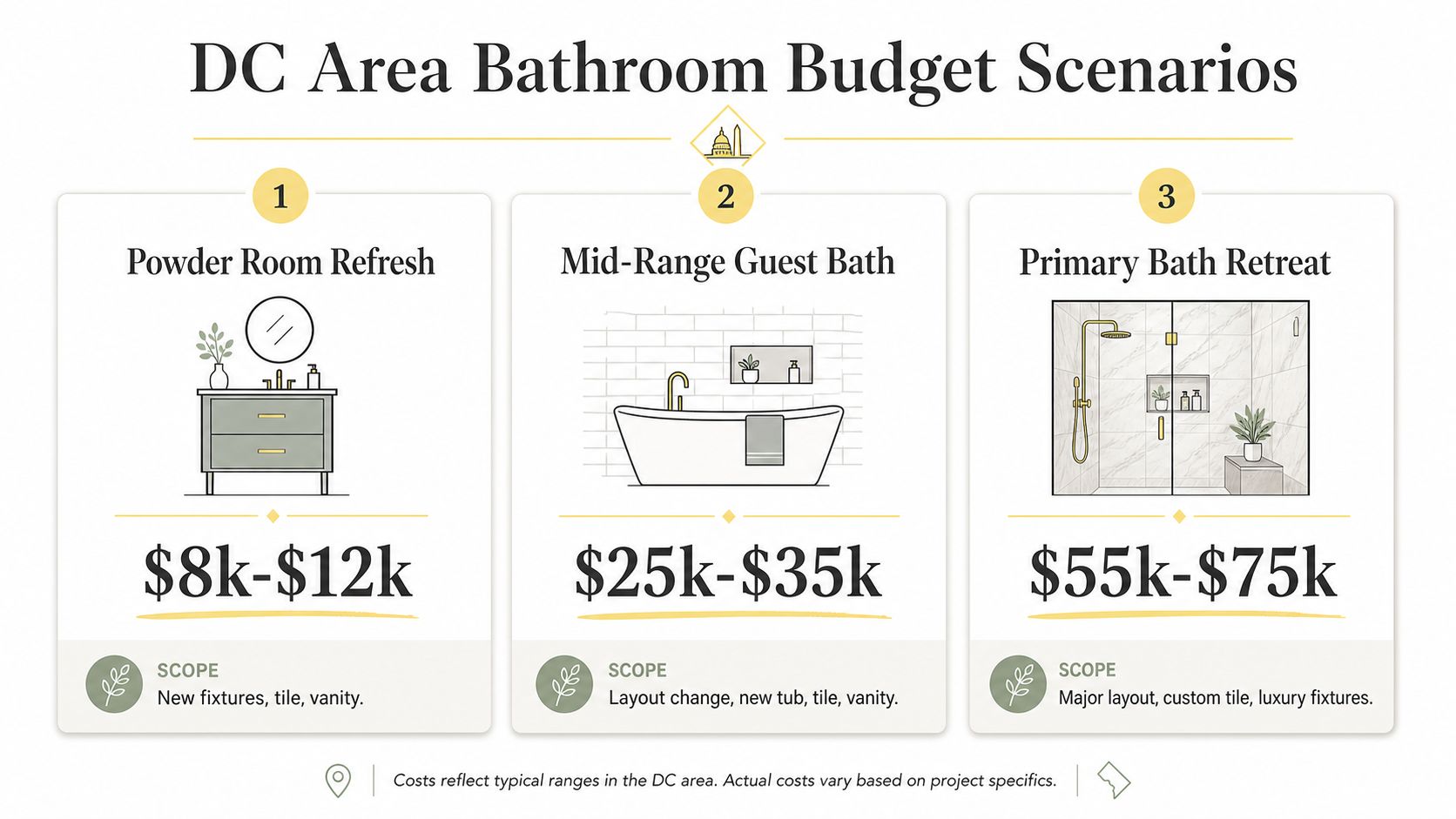
A national average is useful only if you know which project it describes. In the DC area, I'd rather sort bathrooms into three working scenarios, because that's how clients commission them. A powder room refresh, a mid-range guest bath, and a primary-bath retreat are different animals, and they should not be priced as if they were interchangeable.
Powder room refresh
This is the smallest project, but not the least design-sensitive. You're usually looking at a new vanity, fresh tile, updated mirror, better lighting, and cleaner hardware. In this range, the money should go into the parts people touch every day. A beautiful faucet, a well-proportioned vanity, and good lighting matter more here than chasing luxury in every category.
Mid-range guest bath
The budget starts to show its structure here. If the layout shifts, the plumbing and tile work rise together, and the room begins to feel like a real construction project rather than a cosmetic update. This is the zone where homeowners often decide whether a better shower build, better storage, or better lighting is worth the leap.
Primary-bath retreat
This is the project where people are most likely to underestimate the cost at the beginning. Larger bathrooms carry more finishes, more labor, and more coordination. Houzz's 2024 survey data show a national median spend of $13,000, major remodels at $22,000, larger bathrooms of 100+ square feet at $25,000, smaller bathrooms under 100 square feet at $17,000, and the top 10% of projects at $60,000 Houzz study. That spread is the point. Primary baths can move from comfortable to costly very quickly.
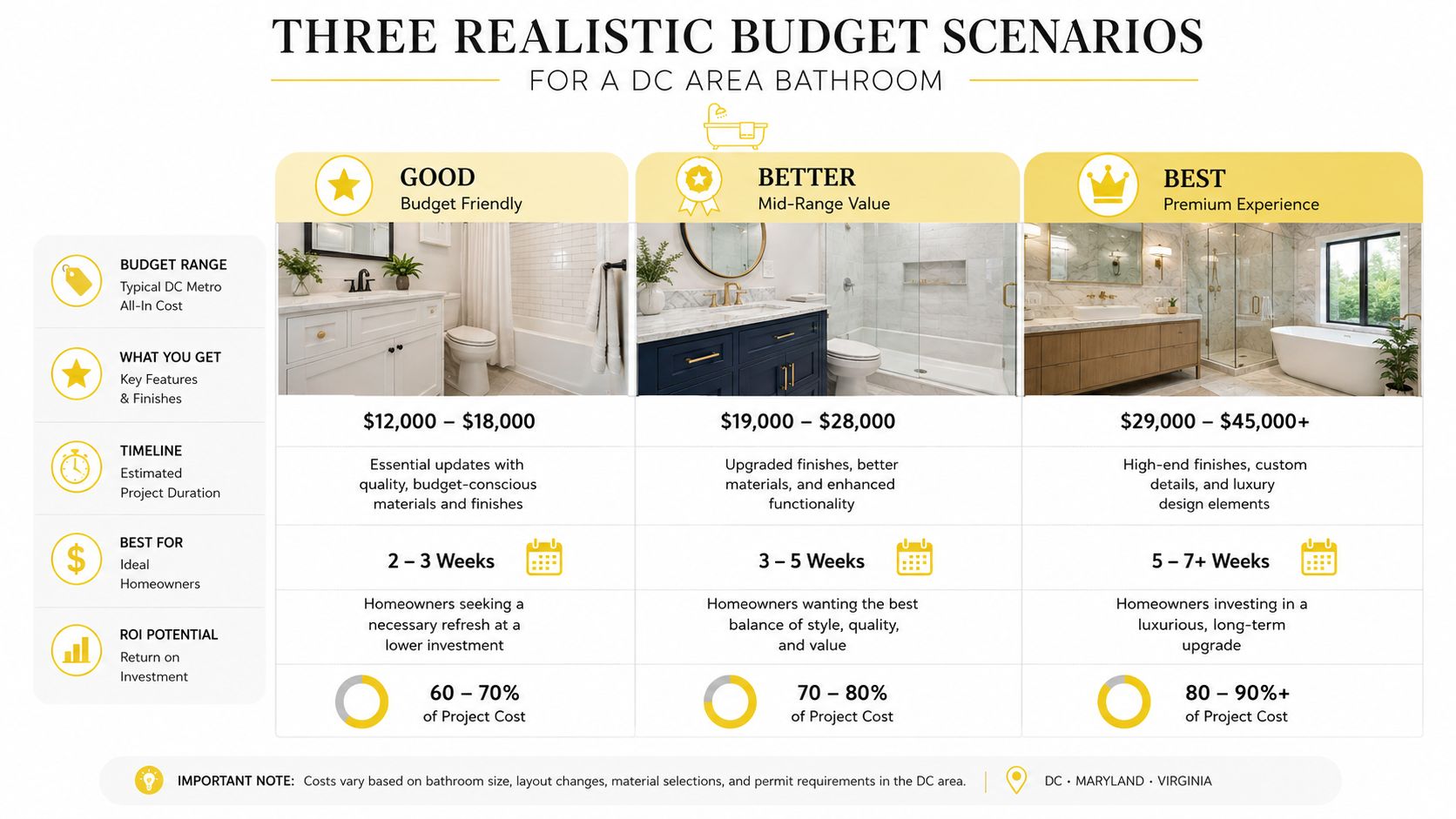
The right splurge depends on the room. In a powder room, spend on character. In a guest bath, spend on durability. In a primary bath, spend on the shower, the lighting, and the storage plan. Those are the places a project pays you back every morning.
How DC, Maryland, Virginia, and Delaware Adjust the Numbers
A bathroom quote in the DC area only makes sense when you know which jurisdiction you are in. A rowhouse in Chevy Chase, a newer home in Ashburn, and an older house in Easton or Delaware may all sit in the same design meeting, but the budget behaves differently in each one. Labor, permitting, site access, and how easily materials and fixtures get into the house all shape the final number.
Older homes usually carry more unknowns
In older DC, Maryland, and Delaware homes, I expect more substrate questions, more finish transitions, and more hidden repair work once demolition starts. Tight access and older framing can slow the job and stretch the trade sequence. That does not make the project a problem. It means the estimate should reflect the house in front of you, not an ideal version of it.
Newer construction can simplify the math
A newer Ashburn home usually gives you a cleaner starting point. The trades may have easier access, the framing is more predictable, and the existing systems are often easier to work around. That keeps the budget steadier, especially when the homeowner wants an efficient refresh instead of a full reconfiguration.
Local rules and approvals still matter
Permits, inspections, and HOA expectations can affect both the schedule and the budget in the DC area, especially when the scope touches plumbing, electrical, or structural elements. That is why regional experience matters. A firm like Jennifer Gilmer Kitchen & Bath, with showrooms in Chevy Chase, Easton, and Ashburn, understands how local projects move from concept through installation and where delays usually start. For a DC-specific overview of local remodeling considerations, their bathroom remodeling in Washington DC page is a practical starting point.
The simple truth is that national averages do not know your jurisdiction. Your zip code, house age, and access conditions do. That is the budget reality in this region, and it is why two bathrooms that look similar on paper can price out very differently once the work begins. Even the practical extras, like what to budget for moving home, follow the same rule. The listed price is only the starting point.
Hidden Costs Most Bathroom Budget Guides Skip
Most budget guides stop at the surface number. They list vanity, tile, and fixtures, then act surprised when the project lands higher than expected. That is not budgeting. That is optimism with a spreadsheet.
The costs that show up after demolition
Design fees are easy to skip on paper until selections start multiplying and the room needs real coordination. Structural surprises are harder to ignore because they usually show up only after the walls are open. In older homes, mold, damaged substrate, old plaster, or outdated assemblies can surface after demolition and force the budget to cover repair work before finishes can move ahead.
Permits and miscellaneous costs may feel minor, but they still belong in the budget. Published breakdowns note that labor can absorb 40%–65% of the total budget, while permits and miscellaneous costs can add 5%–15% cost breakdown. That is why the same bathroom can look manageable during pricing and expensive by the time the work is finished. Every scope change exposes another assumption.
Temporary living arrangements matter too. If this is your only full bath, construction becomes a logistics problem as much as a design problem. Homeowners who plan for the inconvenience usually make calmer decisions, and calmer decisions keep spending under control.
The same lesson shows up outside remodeling. what to budget for moving home is a good reminder that the listed price rarely covers the full cost. Different category, same rule.
If there is one line item I refuse to skip, it is contingency. A bathroom with no contingency is a project built on denial. The reserve is not pessimism. It is professional budgeting.
A smart budget assumes something behind the wall will ask for money.
When a Design and Build Firm Is Worth the Investment
There's a point where managing the job yourself stops saving money. That point usually arrives when the layout changes, plumbing moves, electrical gets reworked, or the house is old enough to hide problems behind every finish layer. At that stage, the homeowner isn't really hiring one contractor. They're managing a chain of decisions, and every missed handoff costs time.
A design and build firm earns its keep by reducing those handoff mistakes. The design team plans the room, the selections are coordinated before the job starts, and the construction sequence is managed so the shower detail, vanity install, lighting, and trim all line up. That matters most when the room is being reconfigured rather than merely refreshed.
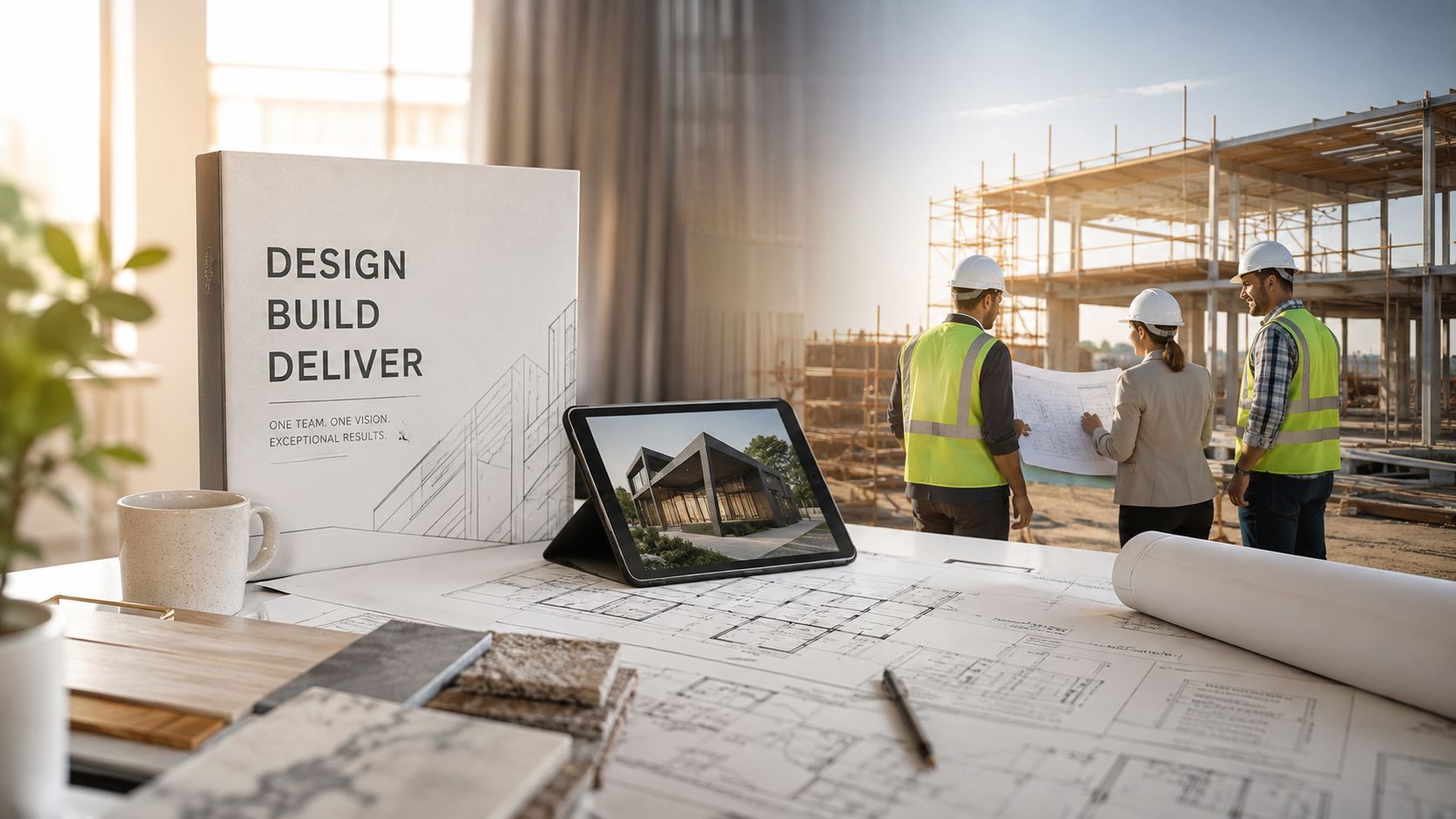
Jennifer Gilmer Kitchen & Bath works that way, from concept through installation, with a team led by Jennifer Gilmer, CKD, Nancy McCarren, AIA, LEED AP, and Marie-Josée Parisi. That matters in a bathroom because the room punishes sloppy sequencing. If the tile, plumbing, lighting, and cabinetry aren't coordinated early, the budget usually pays for it later.
If you're planning a bathroom remodel in Washington, DC, Maryland, or Virginia, start with a conversation that treats the budget as a design tool, not a guess. Visit Jennifer Gilmer Kitchen & Bath to talk through your scope, compare materials, and map out a bathroom renovation cost breakdown that makes sense before demolition starts.