.avif)

A kitchen works hard, but it doesn't always need a full renovation to work better. Perhaps the cabinets are structurally sound but dated, the bathroom lighting is unflattering, or storage disappears into deep, fixed shelves. You want a room that feels more functional and considered, yet you're not ready for demolition, extended construction, or a complete replacement of every finish.
The smartest home renovation ideas on a budget don't begin with the least expensive product. They begin with the change your household notices every day. Solve function first, improve the visual anchor second, then layer in hardware, paint, lighting, and accessories. That order protects the budget while giving the room a coherent result.
Final costs depend on room size, existing conditions, materials, labor, and location. National spending data illustrates why scope matters: U.S. home improvement and repair spending rose from $404 billion in 2019 to $611 billion in 2022, then remained above $600 billion through 2025, according to Harvard's Joint Center for Housing Studies. A smaller, well-defined project can be the right response to a costly renovation market.
Jennifer Gilmer Kitchen & Bath serves Washington, DC, Maryland, Virginia, and Delaware. Homeowners can see material examples and discuss possibilities through consultations at the firm's Chevy Chase, Easton, and Ashburn showrooms.
Table of Contents
1. Refresh Cabinetry with Paint and Hardware
Replacing cabinets is rarely the first move when the boxes are square, the doors are sound, and the layout mostly works. A professional paint or stain finish, paired with new knobs, pulls, and hinges, can restore the room's visual order while preserving the investment already in place. This is especially useful in a kitchen or bath that feels dated because of color rather than poor planning.
Cabinet preparation determines whether the result looks deliberate or temporary. Boxes and doors need to be cleaned, dried, lightly prepared, primed with a product suited to the existing surface, and finished with durable cabinet paint. Grease, wax, and moisture left behind will compromise adhesion, so cleaning isn't a minor detail. It's the foundation of the project.
Practical rule: Paint can update sound cabinetry, but it can't correct warped doors, failing hinges, water-damaged boxes, or a layout that frustrates you every day.
A Chevy Chase homeowner might choose soft white paint for dated oak cabinetry and pair it with brushed nickel hardware, buying time before a larger remodel. In a secondary bath, espresso-painted builder cabinets with brass ring pulls can create a warmer, more polished impression without replacing the vanity.
Make the hardware feel intentional
Hardware scale matters as much as finish. Long pulls can give a run of drawers a cleaner, more contemporary line, while smaller knobs may suit a traditional door profile. Before drilling new holes, map placement with painter's tape and check how the new hardware aligns across doors and drawers.
Countertops and backsplash materials should guide the finish selection. Brushed nickel, polished nickel, brass, and black can all work, but the surrounding palette needs to support the choice. It's also worth seeing samples in person because photographs often distort scale and sheen. Jennifer Gilmer Kitchen & Bath offers material examples in its showrooms, and its guide to kitchen cabinet hardware styles can help narrow the direction.
2. Strategic Lighting Upgrades
A room can have attractive finishes and still feel difficult to use if the light is poorly placed. Kitchens need clear illumination over preparation areas, sinks, and islands. Bathrooms need even light at the face, not just a bright ceiling fixture that casts shadows downward.
Layering gives a budget project more reach. General ambient light establishes a comfortable baseline, task lighting supports work surfaces, and accent lighting can draw attention to shelves, tile, or cabinetry details. A dated chandelier may be replaced with a cleaner recessed or surface-mounted fixture, while LED strips beneath cabinets bring light directly to the counter without rewiring the room.
A Maryland kitchen could benefit from replacing an old brass chandelier and adding under-cabinet LED strips along the primary work zone. In a primary bath, a linear vanity fixture with dimmers can support bright morning grooming and softer evening use. The improvement comes from control and placement, not buying a more decorative fixture.
Spend where the work happens
Use warm white light around 2700K when you want an inviting kitchen atmosphere, and consider cooler white light around 4000K for task areas and bathrooms. These color-temperature recommendations are design choices, not rules, so test samples in the actual room before committing. LED fixtures offer efficient, long-lasting operation, but dimmability should be confirmed if you want flexibility.
Under-cabinet lighting should sit toward the front edge of the cabinet rather than deep against the wall. That placement helps illuminate the work surface and reduces glare. Fixture wiring, new circuits, junction boxes, and bathroom locations require qualified electrical work. For additional planning perspective, compare the layered approach with DLG Electrical's kitchen lighting tips, then explore Jennifer Gilmer Kitchen & Bath's guide to kitchen lighting fixtures.
3. Backsplash Installation or Updates
A backsplash occupies a large visual field, yet it usually avoids the cost and disruption of changing appliances, cabinetry, or countertops. That makes it one of the most effective room-identity updates for a kitchen. In a bath, tile can add pattern and texture to a powder room or refresh a vanity wall without changing the plumbing.
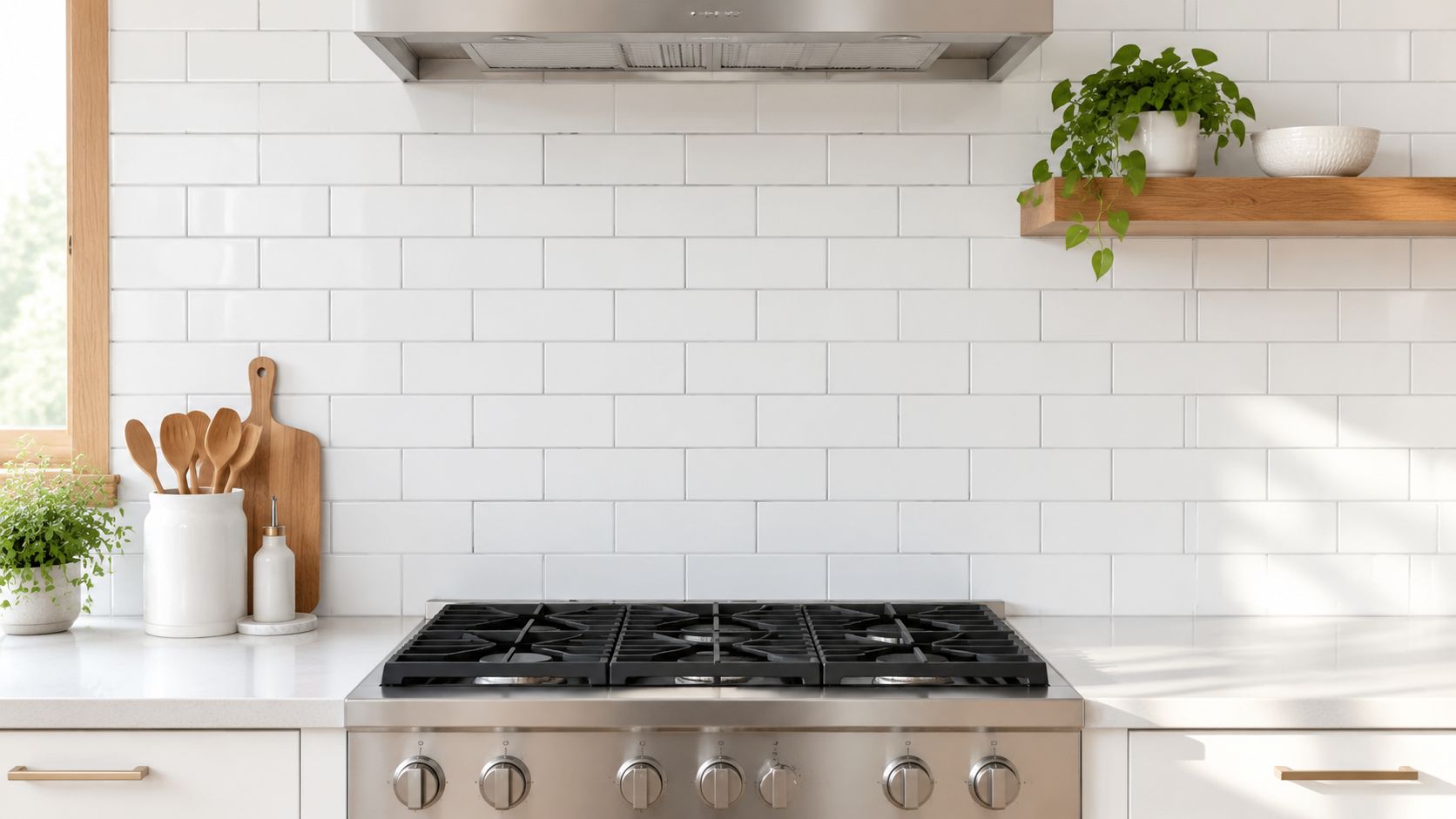
Start with the countertop and cabinet colors already in the room. White subway tile with light gray grout can give almond counters and white cabinetry a cleaner backdrop, while a more expressive tile may be appropriate in a small powder room. In a Chevy Chase powder room, hand-painted Moroccan-style tile could provide character because the compact space can carry pattern without requiring a large material quantity.
Choose the tile and grout together
Subway tile remains a useful budget choice because its simple geometry supports many cabinet and counter styles. Glass and metal can feel more contemporary, but they tend to reveal fingerprints and water spots more readily than ceramic. Grout deserves equal attention. Very light grout shows marks, dark grout can feel visually heavy, and a mid-tone often provides an easier balance.
Wall preparation affects the finish more than the tile price. Bathrooms require appropriate moisture protection, and any wall irregularity can make tile lines appear uneven. Lay out the field before installation to avoid awkward slivers at edges, and confirm that the existing countertop can support the installation without movement or damage.
The visual rhythm becomes easier to judge when you see a backsplash in context. Jennifer Gilmer Kitchen & Bath shares guidance on kitchen backsplash design.
A tile demonstration can also clarify the sequence of preparation, setting, and grouting before you decide whether this is a suitable DIY project.
4. Open Shelving and Floating Shelves
Open shelving can make a small kitchen feel less enclosed, but it isn't a storage solution for every household. Removing upper cabinet doors, or replacing a limited section of wall cabinetry with floating shelves, creates a lighter composition and keeps frequently used pieces within reach. The trade-off is visible maintenance. Dust, grease, and visual clutter become part of the design conversation.
A narrow Easton kitchen might use two floating shelves in place of a portion of upper cabinetry while retaining lower cabinets for concealed storage. The shelves could hold everyday plates, glassware, and a few cookbooks, while less attractive or less frequently used items remain behind doors. In a primary bathroom, one floating shelf above the toilet can hold rolled towels and a small plant without adding the bulk of another cabinet.
Curate the display, protect the storage
Open shelves work best when they're balanced with closed storage. Display items should be useful or meaningful, and grouping by color, height, or material keeps the arrangement calm. A row of mismatched containers and rarely used appliances will make the room feel busier rather than more spacious.
- Check the wall structure: Anchor shelves to studs or use an appropriate support system. If you can't identify the framing or understand the load, hire a professional.
- Protect daily function: Keep everyday essentials accessible, but reserve closed cabinets for clutter, cleaning supplies, and visually inconsistent items.
- Plan for upkeep: Shelves and their contents need more frequent wiping than enclosed cabinets.
- Add depth with light: Lighting above or below shelves can create a gentle focal point, provided wiring and heat management are handled correctly.
The strongest version of this update doesn't eliminate storage. It edits what the room needs to show.
5. Countertop Refinishing or Laminate Replacement
Countertops establish the work surface for both kitchen and bath, so a tired counter can make otherwise sound cabinetry look unfinished. Full replacement may be unnecessary if the substrate is stable. Laminate can sometimes be resurfaced, solid surface can be refinished, and stone may be cleaned or polished when the material itself remains serviceable.
The condition beneath the finish decides whether refinishing is sensible. Water damage, swelling, movement, or delamination in laminate can't be concealed reliably with a new coating. In that situation, replacing the countertop is more responsible than spending on a cosmetic treatment that will fail.
For a Maryland kitchen, replacing outdated laminate with gray engineered quartz can create a cohesive new direction when paired with painted cabinets and updated hardware. In a primary bath, refinishing a solid-surface counter and installing a new faucet may extend the room's useful life until a larger remodel becomes practical.
Coordinate the visual anchor
Engineered quartz can offer a durable, polished alternative to natural stone, but the right choice depends on the room's use, exposure, and design goals. Select the countertop alongside the backsplash, floor, and cabinetry rather than treating it as an isolated purchase. Edge profiles also affect the character of the finished surface. A restrained edge can support a quiet design, while a more detailed profile may suit a traditional room.
Before ordering, review sink type, faucet drilling, overhangs, seams, and support requirements. An undermount sink needs proper structural support during installation, and a seating overhang must be considered with the cabinet construction. These details are where professional coordination adds value.

For existing stone, a specialist such as Canes Cleaners for granite polishing may be more appropriate than replacement.
6. Fixture and Faucet Updates
Faucets, towel bars, robe hooks, and sink accessories are small in scale but constant in use. A faucet that drips, has poor reach, or requires awkward handling affects the household every day. Replacing it can improve both the tactile experience and the visual consistency of a kitchen or bath without changing the room's footprint.
A Virginia kitchen with a dated brass faucet and separate handles might move to a brushed nickel pull-down model, then coordinate that finish with cabinet hardware and lighting. In a primary bath, single-hole faucets paired with matte black towel bars and a matching robe hook can give a vanity area a more unified appearance.
Select for use before finish
Faucet reach needs to suit the sink basin. A fixture that looks right on a display board may splash against the wrong part of the sink or interfere with a window, shelf, or backsplash. Check handle clearance, spout height, spray function, and the location of existing supply lines before purchasing.
Finish coordination doesn't require every metal in the home to match, but the main elements should feel related. Brushed and matte finishes can hide some marks while still needing regular cleaning, particularly in a busy kitchen. Water-efficient aerators rated at 1.5 gallons per minute or less can feel adequate in everyday use, as outlined in the project considerations for this update.
A faucet is a design decision you touch. Test the reach and handle movement before you judge the finish.
Bathroom accessories should be selected as a set. Towel bars, toilet paper holders, hooks, and cabinet pulls placed in the same finish create order at relatively modest scope. Plumbing connections can expose shutoff or wall-condition problems, so bring in a qualified professional when the existing installation is corroded, inaccessible, or incompatible with the new fixture.
7. Flooring Refresh with Resilient Materials
Kitchen and bathroom floors face moisture, dropped objects, spills, and constant cleaning. A flooring refresh can change the entire room, but it should begin with the subfloor rather than the pattern. Soft spots, uneven areas, and movement will telegraph through many resilient materials and shorten the life of the installation.
Luxury vinyl plank can provide a wood-inspired appearance with a softer feel underfoot, while vinyl composite tile offers another practical direction. Ceramic and porcelain tile remain useful where their durability, water resistance, and visual character justify the preparation and installation work. In many homes, resilient flooring can install over an existing surface, but that depends on the condition, height, and compatibility of the layers below.
A Maryland kitchen might use gray-toned luxury vinyl plank over worn vinyl, then coordinate it with refinished cabinets and a new countertop. In an Easton bathroom, porcelain tile with a marble pattern could be installed over the existing floor with a suitable waterproof underlayment, avoiding unnecessary removal if the base is sound.
Let the layout support the room
Plank width influences the visual feel. Wider planks can read as contemporary and spacious, while narrower planks often feel more traditional. Lay out the material before installation so seams don't collect in high-traffic areas and edge cuts remain balanced.
- Prepare the subfloor: Repair movement, moisture, bumps, and soft spots before laying new material.
- Protect wet areas: Use waterproof underlayment where the installation requires it, particularly in kitchens and bathrooms.
- Acclimate the product: Allow resilient materials to adjust to the home's temperature and humidity for 48 hours before installation, following the stated project guidance.
- Coordinate the palette: Review flooring with the cabinet, counter, backsplash, and wall colors together.
A flooring project can be DIY-friendly when the room is simple and the substrate is prepared. Transitions, moisture protection, leveling, and complicated cuts are good reasons to use an experienced installer.
8. Storage Optimization and Organization Systems
Many storage complaints come from poor access rather than insufficient volume. A deep cabinet with fixed shelves may technically hold plenty, yet become frustrating when pots, lids, or cleaning products disappear at the back. Before ordering new cabinetry, audit what the household stores, where each item is used, and how often it needs to be reached.
Pull-out shelves can make deep base cabinets more usable. Drawer dividers separate utensils and daily tools, vertical racks organize baking sheets and cutting boards, and tiered organizers recover height that would otherwise remain unused. In a Chevy Chase kitchen, pull-outs could bring pot lids and baking sheets forward instead of requiring someone to unload the cabinet to reach them.
Bathrooms benefit from the same logic. Tiered under-sink organizers can create separate zones for cleaning supplies, personal care items, and first aid. Wall-mounted shelves can handle towels and small accessories while preserving floor area around the vanity.
Organize by routine, not category alone
Start with high-traffic zones, such as the kitchen sink cabinet, everyday dishware, and the tools used during meal preparation. Use the inside of cabinet doors for small, frequently accessed items, but check hinge clearance and door weight before adding storage hardware.
The best organizer is the one that removes a repeated inconvenience, not the one with the most moving parts.
Flexible systems tend to age better than highly specialized inserts. Families change, cooking habits shift, and bathroom storage needs evolve. Use labels when several people share the room, and leave some capacity unassigned so the system doesn't become difficult to maintain.
Cabinet modifications are often manageable for a capable DIY homeowner, but custom pull-outs, drawer changes, and integrated storage benefit from careful measurement. Jennifer Gilmer Kitchen & Bath can help translate a storage problem into a cabinet detail when a small accessory won't solve the underlying access issue.
9. Cosmetic Updates with Paint, Hardware, and Accessories
Cosmetic work makes sense when the room functions well and the problems are primarily visual. Fresh wall and ceiling paint, updated hardware, a new light fixture, a mirror, artwork, plants, and textiles can give a kitchen or bath a more intentional personality while longer-term plans develop.
A Maryland powder room might use soft green paint, brass hardware, a vintage mirror, and coordinated hand towels for a concise weekend refresh. In a Virginia kitchen, warm white walls, brushed brass cabinet hardware, and carefully styled open shelving can create continuity without disturbing the cabinetry or appliances.
Know when paint stops being enough
Paint won't correct an unsafe electrical condition, a leaking supply line, mold, failing waterproofing, or a layout that forces awkward work patterns. It also won't make damaged cabinetry perform like new. Recent Houzz renovation planning data indicates that homeowners planned smaller projects in 2026, with median planned spending falling to $15,000 from $20,000, while 37% exceeded budget in 2025 and 35% did so after selecting higher-end materials or expanding scope mid-project. Those figures make scope control more useful than indiscriminate cost cutting.
Use large paint samples in the actual room and view them in daylight and artificial light. Warm whites, warm grays, and muted taupes can create a quiet background, but the right choice depends on the floor, counter, and adjacent rooms. High-gloss finishes show fingerprints, while matte finishes may conceal marks more effectively.
When the room is sound, accessories should remain edited. A few useful or meaningful pieces will feel more refined than a crowded collection, and durable materials should take priority in areas exposed to water and daily handling.
9 Budget Home Renovation Ideas Compared
| Item | Implementation Complexity 🔄 | Resource Requirements ⚡ | Expected Outcomes ⭐📊 | Ideal Use Cases 💡 | Key Advantages ⭐ |
|---|---|---|---|---|---|
| Refresh Cabinetry with Paint and Hardware | Medium, surface prep + professional finish | Low–Moderate cost; weeks; painter & new hardware | Noticeable cosmetic renewal; retains existing layout; longevity tied to application quality | Structurally sound but dated cabinets; interim refresh before full remodel | Lower cost vs replacement; fast turnaround; minimal disruption |
| Strategic Lighting Upgrades | Medium, fixture swaps to new circuits when needed | Low–Moderate; may need electrician; phased installation possible | Big functional and mood improvement; energy savings with LEDs | Improve task visibility; outdated fixtures; enhance ambiance | Immediate impact; energy-efficient; flexible implementation |
| Backsplash Installation or Updates | Low–Medium, wall prep and tile installation | Low–Moderate; material-dependent; short project timeline | High visual impact; protects walls; durable when installed correctly | Add focal point; update style without structural changes | Design flexibility; modest cost; protects surfaces |
| Open Shelving and Floating Shelves | Low–Medium, remove doors or mount shelves to studs | Low cost for door removal; moderate if new shelving and pro install | Lighter, open aesthetic; easier access; requires curation | Small kitchens; display-oriented spaces; lighten heavy cabinetry | Creates spacious feel; easy access; cost-effective alternative |
| Countertop Refinishing or Laminate Replacement | Medium, refinishing quicker; replacements more involved | Moderate; options from refinishing to engineered quartz | Renewed surfaces; extends lifespan; durability varies by material | Worn counters; balance budget with durability needs | Extends counter life; mid-range durable options; visual upgrade |
| Fixture and Faucet Updates | Low–Medium, simple swaps; pro plumbing recommended | Low cost; quick installs; may need plumber for some options | Improved ergonomics, water savings, cohesive finishes | Leaky/outdated fixtures; coordinate finishes across rooms | High visual/function impact for low cost; water-efficient choices |
| Flooring Refresh with Resilient Materials | Medium, subfloor prep; professional install advisable | Moderate; LVP/VCT lower than natural stone; install time varies | Strong visual refresh; improved comfort and water resistance | Worn floors; moisture-prone areas; update look affordably | Waterproof options; comfortable underfoot; lower cost than natural |
| Storage Optimization and Organization Systems | Low, measure and install organizers | Low cost; many DIY or simple install products | Better access and efficiency; no added volume | Cluttered cabinets; prioritize function before replacing cabinetry | Immediate functional gains; low cost; reversible solutions |
| Cosmetic Updates: Paint, Hardware, and Accessories | Low, paint and accessory swaps; DIY friendly | Very low cost; rapid completion (weekend to days) | Fast aesthetic refresh; temporary but high perceived change | Budget refresh, rentals, staging, interim updates | Cheapest, quickest impact; highly flexible and low disruption |
Build the Renovation in the Right Order
A budget renovation succeeds when the sequence protects the work that can't be easily undone. Begin with safety, water damage, electrical conditions, plumbing, and structural concerns. A new backsplash won't solve moisture behind the wall, and fresh paint shouldn't cover evidence of a leak. Address those issues before choosing decorative finishes.
Next, improve the parts of the room that shape daily use. Storage, lighting, and work zones often produce more lasting satisfaction than a purely visual change. In a kitchen, that may mean adding pull-outs, correcting task-light placement, or improving access around the sink and preparation area. In a bathroom, it may mean organizing the vanity, improving face lighting, or resolving a fixture that no longer operates comfortably.
Then select the strongest visual anchor. Depending on the existing conditions, that might be cabinetry, countertops, flooring, or backsplash. Don't replace every finish because one surface looks tired. If the cabinets are sound, paint and hardware may carry the room. If the counter is damaged or the floor has failed, those elements may deserve priority instead.
The broader market context supports a disciplined approach. Harvard's housing research found that owner-occupied home improvements represented about two-thirds of total market spending in 2023, reaching $405 billion, up 54% from 2019. The same source reported an average owner improvement spend of about $4,700 in 2023, a useful reminder that many homeowners phase work and prioritize high-impact updates rather than pursue a full gut remodel at once. Houzz's 2024 U.S. study also found that 76% of renovating homeowners set a budget, while 39% exceeded it. A clear scope is a practical design tool.
Match the task to the risk
DIY can make sense for painting, styling, some hardware changes, and organization systems when the surface and measurements are straightforward. Licensed trades or experienced installers should handle electrical work, plumbing changes, moisture protection, structural modifications, cabinet fit, and countertop support. A project can look inexpensive at the purchase stage and become costly when an installation error forces rework.
Kitchen and bath costs vary sharply with room size, existing conditions, materials, labor, and location. HomeAdvisor's 2025 bathroom remodeling benchmark places typical spending between $6,648 and $17,646, with most homeowners spending about $12,147. Houzz reported a $13,000 national median for bathroom renovations in 2024, with larger baths at $25,000 and smaller baths at $17,000, while major kitchens 200 square feet or smaller rose from $32,000 in 2023 to $35,000 in 2024, according to its 2025 renovation spending trends. These benchmarks aren't quotes, but they show why a modest refresh and a layout-driven remodel belong in different planning categories.
For homeowners in Washington, DC, Maryland, Virginia, and Delaware, Jennifer Gilmer Kitchen & Bath can help clarify that distinction. Visit the Chevy Chase, Easton, or Ashburn showroom to review cabinetry, countertops, hardware, lighting, and tile in context, or arrange a consultation for a project that can move from concept through installation. The firm's design process can be especially valuable when a cosmetic update is approaching the point where layout, storage, plumbing, or durable materials deserve a more coordinated solution. For plumbing coordination, remodelers can also review resources such as San Antonio plumbing services for remodelers.
A budget is strongest when it directs money toward the parts of the room that will keep paying back in comfort, access, and durability. Start with the problem you feel every day, define the work tightly, and finish with the details that make the result feel complete.
Visit Jennifer Gilmer Kitchen & Bath to compare kitchen and bathroom materials, cabinetry, lighting, and hardware in the Chevy Chase, Easton, or Ashburn showrooms. Schedule a consultation to develop a budget-conscious project for your DC, Maryland, Virginia, or Delaware home, with guidance available from concept through installation.