.avif)
You can have a clear vision for the kitchen and still feel stuck the moment the numbers land. The cabinet drawings are right where you want them, the island finally makes sense, and then the total comes back higher than the cash you set aside. That's not a failure in planning, it's the point where kitchen remodel financing options become part of the design conversation, not an afterthought.
Most homeowners still prefer to fund a remodel with savings, and that instinct makes sense. But kitchens are expensive rooms to do well, especially once you move beyond surface updates into better storage, new appliances, and changes to the layout. A thoughtful financing plan lets you protect quality, avoid rushed compromises, and keep the project moving without draining every liquid dollar you have.
Table of Contents
When Savings Are Not Enough
The first real fork in the road usually appears when the dream kitchen stops fitting the savings account. A homeowner comes in with a clear idea, maybe better storage, a larger island, or a cleaner workflow, then discovers the finishes and construction needed to do it right cost more than what's sitting in cash.

Borrowing is not a design compromise
Borrowing for a kitchen isn't automatically a sign that the project is out of control. In the right situation, it's the cleanest way to bridge the gap between what you've already saved and what the finished room requires. That gap often appears when clients choose custom cabinetry, upgraded hardware, or a smarter layout that solves problems the old kitchen never could.
A good finance decision starts with honesty about timing. If you want to move forward now instead of waiting another year, financing can preserve momentum while you keep the build quality where it belongs. For a practical way to organize the numbers before you choose a loan, use the kitchen remodel cost calculator to get a clearer picture of what's driving the total.
Save for some things, finance the rest
I like a mixed strategy more than an all-or-nothing one. Some clients should absolutely keep a dedicated reserve, then finance the portion tied to construction, cabinetry, or appliances. A simple habit like learning to prepare for future expenses can make that split feel far less stressful.
A remodel should never force you to choose between good workmanship and financial breathing room.
That's the goal. You want a kitchen that feels deliberate, not one built under panic. If the savings only cover a partial refresh, that doesn't mean the project has to shrink into something mediocre.
Understanding the True Cost of a Kitchen Remodel
The range is wider than most homeowners expect. Multiple industry sources place a typical U.S. kitchen remodel in the roughly $14,588 to $41,550 range in 2026, while a major remodel often runs $20,000 to $65,000 and a full remodel can reach $65,000 to $130,000+ depending on scope, cabinets, appliances, and layout changes, according to Discover's kitchen remodel cost guide. That spread tells you something important, the financing question changes once you move from a cosmetic update to a true redesign.
Scope drives the budget
A kitchen with new paint, a backsplash, and a few fixture changes lives in a very different financial world from one with custom cabinetry, reworked electrical, and integrated appliances. The more the room changes structurally, the more likely financing will be part of the plan. That's why the same home can support a modest update one year and a more serious borrowing decision the next.
Hidden costs also matter. Permits, unexpected plumbing or electrical work, and design fees can turn a tidy budget into a looser one. Even when you think you've planned carefully, kitchens tend to expose whatever the old house has been hiding behind the walls.
Why the financing conversation starts here
The mistake I see most often is choosing a loan before the scope is clear. If the project is still evolving, the budget should evolve too. That's the difference between financing a finished plan and financing a guess.
For a broader pricing benchmark, the average kitchen remodel cost is the right place to compare your wish list with the market reality. Use that number as a guardrail, not a target. The goal isn't to spend the average amount, it's to spend enough to solve the room properly.
Comparing the Major Financing Options
The best kitchen remodel financing options aren't the ones with the flashiest promo. They're the ones that match your project size, your tolerance for risk, and how soon you need money in hand. A personal loan, a HELOC, and a home equity loan can all work, but they solve different problems.
Financing Options at a Glance
| Option | Best For | Typical APR | Funding Speed |
|---|---|---|---|
| Personal loan | Smaller to mid-sized projects, fast decisions, no home equity needed | About 6.2% to 36% | 1 to 3 days |
| HELOC | Phased projects, changing scope, borrowing only what you use | Variable, so it can move over time | Slower than a personal loan, depends on underwriting |
| Home equity loan | Fixed-scope projects with a clear total budget | Often lower than unsecured borrowing, because the home secures it | Slower than a personal loan, with more closing steps |
| Credit card | Small purchases, short promotional windows, quick point-of-sale use | Can be high after promos end | Immediate |
For personal loans, the speed is the headline. They don't require home equity, and they can fund in 1 to 3 days, but that convenience comes with higher APRs, commonly ranging from about 6.2% to 36% with terms of roughly 2 to 7 years, according to PrimeRates' kitchen remodel financing overview. That makes them useful when you want a predictable payment and don't want to tie the project to your house.
How I read each option
A HELOC gives you flexibility. For a remodel that unfolds in waves, that matters more than getting every dollar at once. You draw what you need, when you need it, which keeps you from paying interest on funds that are still sitting untouched.
A home equity loan is better when the scope is locked. It delivers the full amount upfront and repays in fixed monthly installments, which gives the budget a more orderly feel. If the plan is already final, that predictability can be worth a great deal.
Credit cards belong in a narrower lane. They're fine for a small appliance purchase or a short-term promotional window, but I would never build a full kitchen strategy around them unless the balance is tiny and the payoff plan is brutally disciplined.
If you're choosing between speed and lower cost, don't guess. Decide which one matters more for this project.
Matching Your Project Scope to the Right Loan
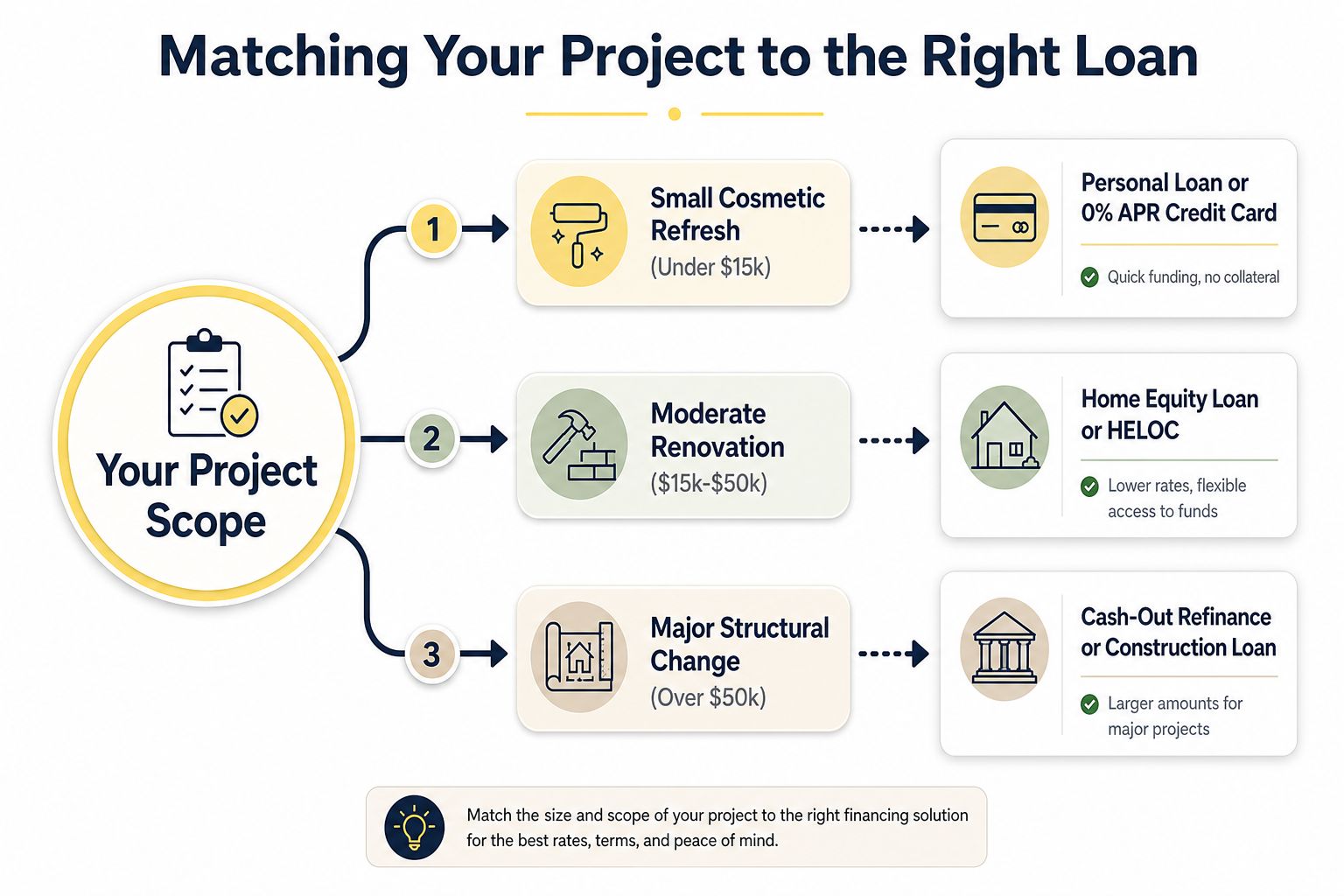
The right loan starts with the room you're building, not the one you sketched on day one. A light refresh, a moderate renovation, and a structural rework each call for a different financing posture. That's why the budget conversation should always sit beside the design conversation.
Start with project scope, not lender marketing
If the project is a small cosmetic refresh, I'd favor the simplest possible borrowing tool. A personal loan can make sense when you want quick funding and don't want to pledge home equity for a narrow scope. That keeps the process efficient and avoids bringing too much financial machinery to a modest job.
For a more substantial renovation, a secured loan starts to look more rational. A HELOC works especially well when the design is still being refined, because you can borrow in stages rather than all at once. That structure keeps the financing aligned with the way real kitchen projects move, which is usually not in a straight line.
When fixed payments matter most
A home equity loan fits best when you know the plan is staying put. If the layout is set, the finishes are chosen, and the contractor's number is stable, fixed payments bring welcome calm. The home secures the loan, so the terms often feel more grounded than unsecured borrowing.
The broader point is this, your credit profile and equity position affect what you can access, but your project scope should decide what you should use. That order matters. A homeowner with excellent credit can still choose the wrong product if the loan structure doesn't match the work.
Borrow for the project you have, not the one you hope will eventually appear.
A useful rule of thumb is simple. Small and fast points toward unsecured borrowing. Fixed and defined points toward home equity. Phased and evolving points toward a line of credit.
The Case for Phased Financing in Design-Driven Projects
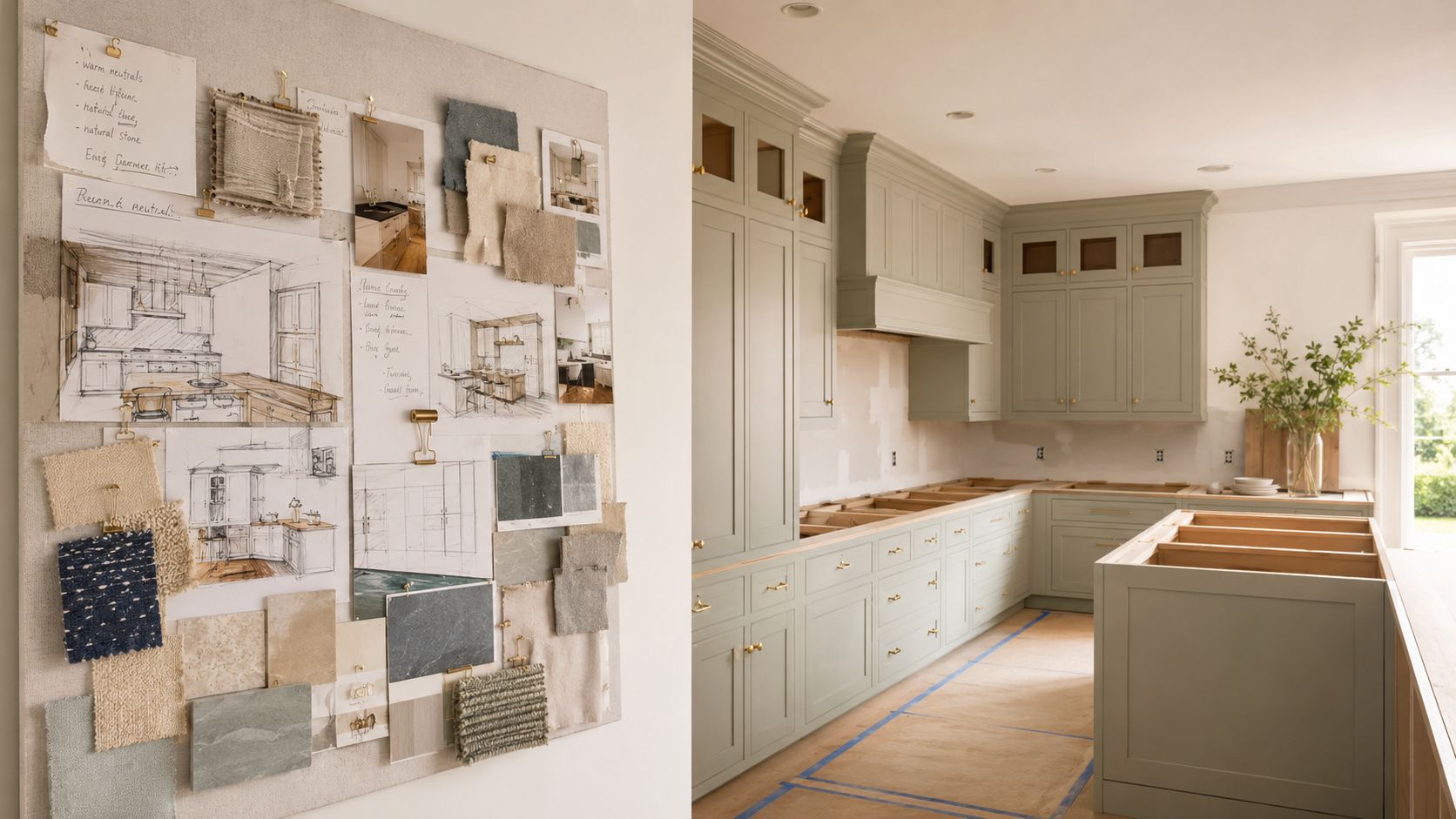
A kitchen rarely finishes with the same assumptions it started with. Cabinets get refined, appliances change, and the room reveals structural issues once the design work gets serious. That's why phased financing often makes more sense than locking in a big loan before the final scope is known, as noted in Build-Folio's kitchen remodel financing guidance.
Don't finance the unknown
Borrowing early can be expensive for no good reason. If you take out a full loan before the design is settled, you can end up paying interest on funds you haven't needed yet. That's a poor trade in any market, and it's especially clumsy in a custom kitchen where the final material list often shifts as choices get made.
A smarter approach is often staged. Use savings for early design work, then bring in short-term financing for specific purchases if needed, and wait on the larger secured product until the scope is firm. That keeps your borrowing tied to real decisions instead of placeholders.
Why phased funding protects the budget
A disciplined project manager matters. If cabinetry lead times, appliance timing, and layout decisions aren't coordinated, the financing can get ahead of the build. I prefer a plan that lets the design breathe before the loan does.
The project managing a renovation mindset works well here because it treats money like one more part of the schedule. You don't release everything at once just because the room will eventually need it. You match the draw to the stage.
The cleanest financing plan is often the one that waits for clarity.
That approach isn't cautious for the sake of caution. It's practical. It protects equity, reduces waste, and gives the final kitchen a better chance of reflecting what you wanted at the start.
How Jennifer Gilmer Kitchen & Bath Supports Your Budget
A kitchen budget gets clearer when the scope is defined with discipline from the start. At Jennifer Gilmer Kitchen & Bath, clients work with designers who understand how layout, materials, and craftsmanship shape both the room and the financial plan. Jennifer Gilmer, CKD, Nancy McCarren, AIA, LEED AP, and the team guide selections so the investment goes where it will have the most impact.
The firm serves Washington, DC, Maryland, and Virginia, and that regional focus matters because real homes, and real budgets, vary widely from one project to the next. Clients can see cabinetry and materials in the Chevy Chase, Easton, and Ashburn showrooms, which makes it easier to compare options before the scope is locked in. That hands-on selection process cuts down on guesswork, and guesswork is what usually leads to financing mistakes.
Phased projects need that kind of clarity. A client may begin with a full kitchen vision, then refine the plan once cabinetry options, appliance choices, and finish levels are seen in person. The budget should follow those decisions, not force them.
When a kitchen is planned from concept through installation, the numbers stay more grounded. You are funding a defined room, built with care, and shaped by choices that have already been tested in person. That approach keeps the financing tied to reality instead of to a moving idea.
If you are weighing kitchen remodel financing options, start with scope. A design consultation can help you define what enough looks like for your project before you commit to any loan.