.avif)

You're standing in a kitchen showroom with a ceramic subway tile sample in one hand and a marble chip in the other. Both look right on the display wall. The harder question is whether either one will still feel right after nightly cooking, splattered sauce, a busy sink, and years of ordinary cleaning.
That's the point where backsplash decisions become less about inspiration and more about judgment. The right backsplash material depends on how your household cooks, cleans, entertains, and plans to use the kitchen over time. The following framework reflects the questions a senior designer would ask while reviewing samples at Jennifer Gilmer Kitchen & Bath showrooms in Chevy Chase, Easton, and Ashburn, serving homeowners throughout Washington, DC, Maryland, and Virginia.
Table of Contents
- Heat, moisture, and stains
- Porosity and sealing
- Grout and the first point of failure
- Edges and visual transitions
- Light and reflectance
The Moment Most Homeowners Get Stuck
A homeowner may arrive with a folder full of saved images, each showing a different version of the same dream kitchen. One has a quiet porcelain wall, another has veined marble behind the range, and a third uses handmade tile with deliberately uneven edges. The images help establish taste, but they rarely answer what happens when olive oil, coffee, tomato sauce, and steam meet the surface every day.
That showroom moment is familiar. The homeowner compares the cleanability of a tile field with the uninterrupted look of a slab, then realizes that the decision affects more than color. It affects grout, sealing, repairs, lighting, installation, and how confidently the kitchen can handle the household's actual routine.
A useful rule: Choose the surface for the work it will do, then choose the color and pattern that make you want to live with it.
There isn't one universally superior backsplash material. A client who cooks lightly and values historic character may accept the care required by marble or zellige. A family that cooks several meals a day may prefer dense porcelain or a quartz slab because fewer maintenance decisions fit the rhythm of the room.
Start with the household, not the sample
Before narrowing the palette, consider where the backsplash will sit. A wall behind a range receives more heat and grease than a small run beside a prep sink. A corner with several outlets demands more cuts than a broad, uninterrupted wall. A kitchen intended for a long stay deserves a different repair strategy from a temporary update.
Houzz's 2025 study of kitchen backsplashes found that more than 4 in 5 homeowners prioritize the backsplash, with 85% treating it as a key design element. The same research reports that coverage extending to cabinets or range hoods reached 67%, while full-height backsplashes reaching the ceiling rose to 12%. Those choices make the backsplash a larger visual and practical part of the room.
The best shortlist usually contains two or three materials that fit the household before it addresses the final shade, layout, or edge. That's the same conversation a designer would have with a client before ordering samples.
How Designers Actually Judge a Backsplash
Designers evaluate a backsplash as a working surface, not just as a decorative wall. Six questions usually expose the meaningful differences between materials.
Heat, moisture, and stains
First, identify the exposure. The area behind a cooktop must tolerate heat, grease, and repeated wiping. The wall near a sink must handle water and cleaning products. Dense porcelain is a strong technical choice because it's non-porous and can have water absorption at or below 0.5%, according to The Tile Shop's guidance on kitchen backsplash materials. Porcelain doesn't need sealing, while glazed ceramic offers good everyday performance at a lower cost, though it's generally less tough.
Porosity and sealing
Porosity determines how quickly a spill can become a maintenance issue. Glass, porcelain, and glazed ceramic are among the easier materials to clean because they resist moisture and staining. Marble, brick, and other porous surfaces need periodic sealing to slow stain uptake, particularly around acidic ingredients. Stainless steel is durable and heat resistant, but fingerprints and polishing become part of its care routine, as described in this backsplash shopping guide from The Globe and Mail.
Grout and the first point of failure
Tile installations have more than one component to judge. The tile may perform well while grout collects grease, discolors, or needs deep cleaning. A slab removes most grout from the field, but a crack or impact can affect a large, difficult-to-replace panel. Designers also examine the substrate, because an uneven or unstable wall can undermine an otherwise excellent surface. Substrate preparation becomes especially important with large-format tile and slabs.
Edges and visual transitions
Edges deserve attention before fabrication. Tile may finish with a trim profile, a rounded edge, or a carefully placed cut. Slabs can use a mitered edge or a laminated edge, depending on the material and the desired thickness. The backsplash also needs to meet countertops, windows, cabinets, and outlets without awkward transitions.
Light and reflectance
Under-cabinet lighting changes the material's personality. Glossy ceramic and glass can reflect bright points or reveal unevenness, while honed stone absorbs light and shows more tonal depth. The same sample may look calm in a showroom and much busier under a continuous LED strip.
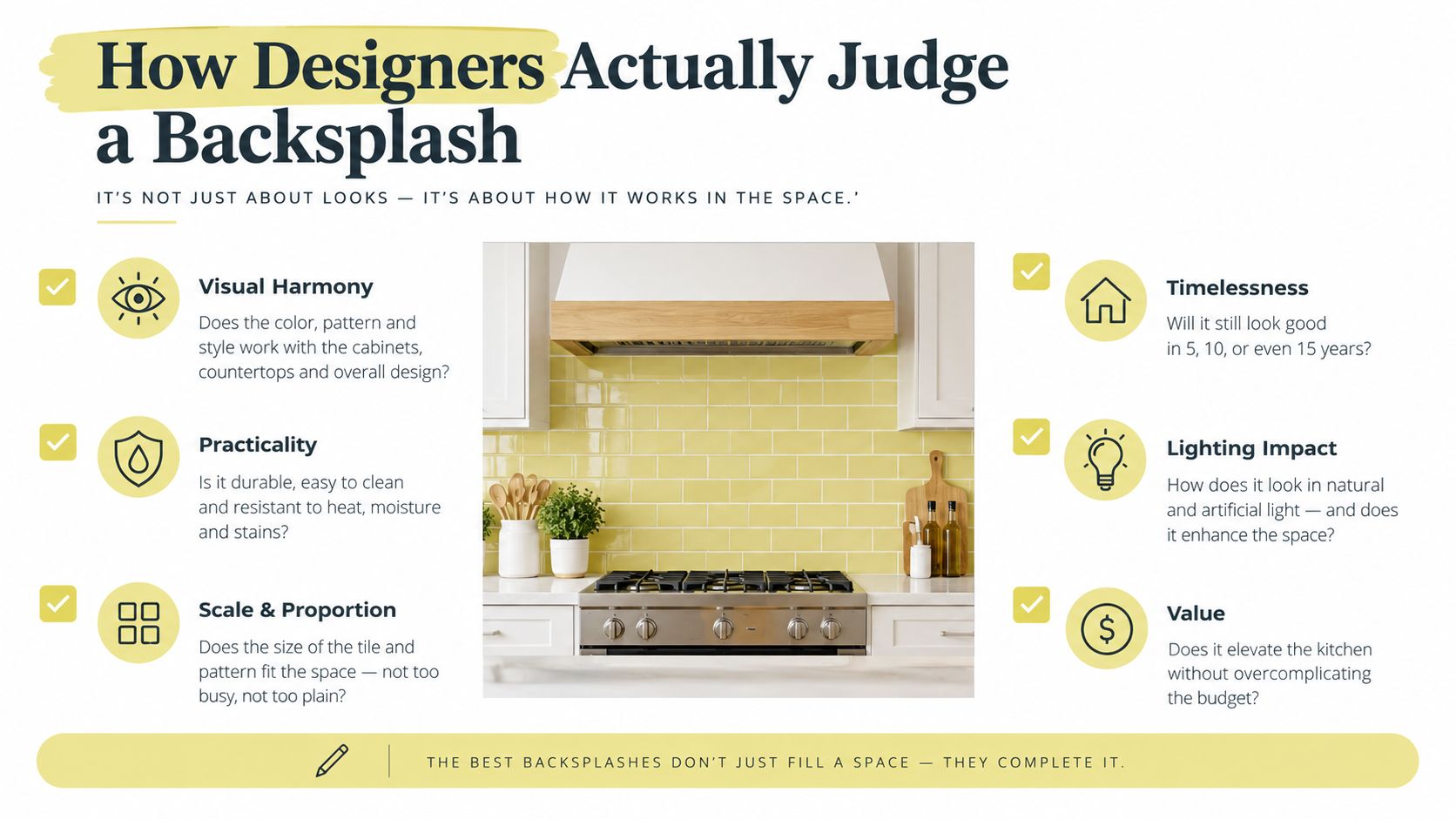
For a useful visual and planning reference, review this kitchen backsplash design guidance. The material, grout, lighting, and installation should be considered together, because a backsplash succeeds only when all four behave well in the finished room.
A Clear Look at Each Material Option
A fair comparison uses the same questions for every material: how it handles daily exposure, what care it requires, how it fits the architecture, and what installation asks of the project. Exact pricing depends on product, layout, fabrication, access, and labor, so the table uses qualitative cost descriptions rather than invented figures.
Backsplash Materials Compared
| Material | Durability | Maintenance | Cost (per sq ft installed) | Design Fit | Installation Notes |
|---|---|---|---|---|---|
| Ceramic tile | Good for everyday use when glazed | Wipe glaze, maintain grout | Lower to moderate | Traditional, transitional, handmade, patterned | Straightforward cutting, careful layout, grout selection |
| Porcelain tile | Very high resistance to moisture and wear | Low, no sealing for porcelain | Moderate to high | Modern, transitional, large-format, quiet stone looks | Requires appropriate tools, level substrate, and skilled handling |
| Glass | Resists staining and moisture | Easy to wipe, fingerprints show | Moderate to high | Bright, reflective, contemporary, accent walls | Precise cutting and adhesive selection matter |
| Natural stone | Varies by stone, marble can etch | Sealing and prompt spill care | Moderate to premium | Historic, classic, organic, highly individual | Stone-specific setting, sealing, and edge work |
| Metal | Durable and heat resistant | Wipe and polish to manage marks | Moderate to premium | Modern, industrial, tailored, warm metallic schemes | Accurate measuring and clean edge treatment are important |
| Engineered quartz slab | Non-porous and visually consistent | Low routine maintenance | Premium | Contemporary, quiet, full-height walls | Templating, fabrication, seams, and professional setting |
| Peel-and-stick vinyl | Best for light-duty or temporary use | Simple surface cleaning | Lower upfront cost | Rental, quick refresh, decorative update | Needs a smooth, clean wall and careful alignment |
Ceramic tile remains a practical choice when clients want pattern, color, or a familiar format without committing to a premium slab. A properly glazed surface resists everyday spills, heat, and moisture, while the grout becomes the part that demands attention. Ceramic works especially well in kitchens with classic cabinetry, but an untreated or poorly selected porous product won't deliver the same performance as glazed tile.
Porcelain suits households that want durability with a broad design range. It's fired at high temperatures and has water absorption of 0.5% or less under ASTM C373, which makes it effectively impervious for wet, high-splatter zones, according to MSI Surfaces' porcelain backsplash guidance. Large formats reduce grout, though they demand better wall preparation, accurate cuts, and experienced installation.
Glass is non-porous and resists staining from ingredients such as tomato sauce. It's particularly effective behind a sink or in a smaller accent area where its reflective quality can brighten the room. The quiet disappointment is visibility. Glass shows fingerprints and smudges readily, as noted in Houzz's overview of backsplash materials.
Natural stone includes very different personalities. Marble brings veining and a willingness to develop patina, while granite, quartzite, and soapstone offer distinct levels of hardness, movement, and porosity. Marble can etch from acidic spills and may need resealing every 6 to 12 months, according to this comparison of backsplash materials. It's often chosen because the homeowner accepts that care as part of the material's character.
Metal creates a precise, custom wall with stainless steel, copper, or brass. Stainless steel handles heat and moisture well, while copper and brass introduce warmth that can complement wood cabinetry or unlacquered hardware. Metal requires accurate measurement and thoughtful polishing, and stainless steel can look untidy if fingerprints are left unattended.
Engineered quartz slabs offer consistent color, minimal grout, and a calm full-height presence. Their non-porous surface makes daily wiping simple, but fabrication, seams, corners, and handling raise the installation stakes. A slab is most successful when the design resolves outlets, windows, and transitions before the fabricator templates the wall.
Peel-and-stick vinyl is appropriate for a quick refresh, rental, or temporary decision. It can mimic tile or stone without mortar, but its lifespan is limited compared with a properly installed ceramic, porcelain, glass, or stone backsplash. Homeowners considering kitchen backsplash tile stickers should pay close attention to surface preparation, heat exposure, adhesive quality, and the possibility of future removal.
Slab or Tile, The Question That Matters Most
The slab-versus-tile decision becomes clearer when you stop comparing photographs and start comparing ownership. A full-height slab removes grout from the field, so daily wiping is simpler and the wall reads as one continuous surface. The tradeoff is concentrated risk. A crack, chip, or fabrication error affects one large panel rather than a replaceable individual tile.
Tile spreads risk across many pieces. A damaged tile can be removed and replaced without disturbing the entire wall, which matters when a kitchen evolves or a future repair becomes necessary. Grout remains the ongoing obligation, since cooking residue gathers in joints and the installation may need periodic resealing or deep cleaning.
Recent coverage points to a growing preference for slab surfaces. Homes & Gardens' 2026 backsplash trends coverage reports that slab backsplashes account for 28% of kitchen backsplashes in one 2026 kitchen study and describes large-format stone or porcelain slab runs as a leading choice in current kitchens. The same source identifies a practical gap in much of the trend conversation, slabs reduce grout and cleaning, while tile remains easier to repair in sections.
Slab vs Tile Backsplash Ownership Comparison
| Factor | Slab Backsplash | Tile Backsplash |
|---|---|---|
| Daily cleaning | Fewer joints and quick wiping | More joints and grout care |
| Repairability | Damage can affect a large panel | Individual pieces can be replaced |
| Visual effect | Continuous, quiet, and expansive | Pattern, texture, and modular detail |
| Installation | Template, fabrication, handling, and setting | Layout, cutting, adhesive, and grouting |
| Design flexibility | Strong for uninterrupted surfaces | Strong for patterns, borders, and changes |
| Long-term decision | Best when the layout is settled | More adaptable to future repairs or revisions |
A slab can make sense for a homeowner who values a minimal wall, expects the layout to remain stable, and prefers to pay for fabrication in exchange for fewer grout lines. Tile often makes more sense for a client who values serviceability, handmade variation, or the ability to replace a small area.
The countertop relationship matters, too. Review the firm's discussion of quartz versus granite countertops with the backsplash decision, because the two surfaces should be evaluated as a visual and functional pair rather than as isolated selections.
Matching Materials to Real Households
The same material can be sensible in one kitchen and frustrating in another. At Jennifer Gilmer Kitchen & Bath, the specification begins with the household's routine and the home's architecture, not with a material ranking.
The busy family kitchen
A family cooking nightly needs a surface that can tolerate hurried cleanup and frequent splatter. Through-body porcelain, a quartz slab, or a textured ceramic with a forgiving pattern can work well because they reduce concern about visible stains and offer practical resistance around active work zones.
The family gives up some delicacy and, in the case of a slab, some repair flexibility. A highly porous marble with dramatic veining may be beautiful, but it asks for faster spill response and more consistent maintenance than this household wants to provide.
The downsizing condo
An empty-nester moving into a condo may want the kitchen to feel larger and quieter. Large-format porcelain panels can create a clean wall with minimal grout and a restrained relationship to contemporary cabinetry.
The tradeoff is installation complexity. Large pieces require careful handling, a prepared wall, and precise coordination around outlets and corners. If the condo's layout is still changing, modular tile may offer more forgiveness.
The historic rowhouse
A homeowner restoring a Dupont Circle or Capitol Hill rowhouse often wants the backsplash to respect the building's age. Marble or zellige tile paired with unlacquered brass can support that period-aware atmosphere, especially when slight variation feels intentional rather than defective.
The homeowner accepts more maintenance in return for depth and character. Zellige's irregular surface and marble's sensitivity to acidic spills won't suit someone seeking a completely uniform, low-care wall, but they can be the right choice when authenticity matters more than perfect consistency.
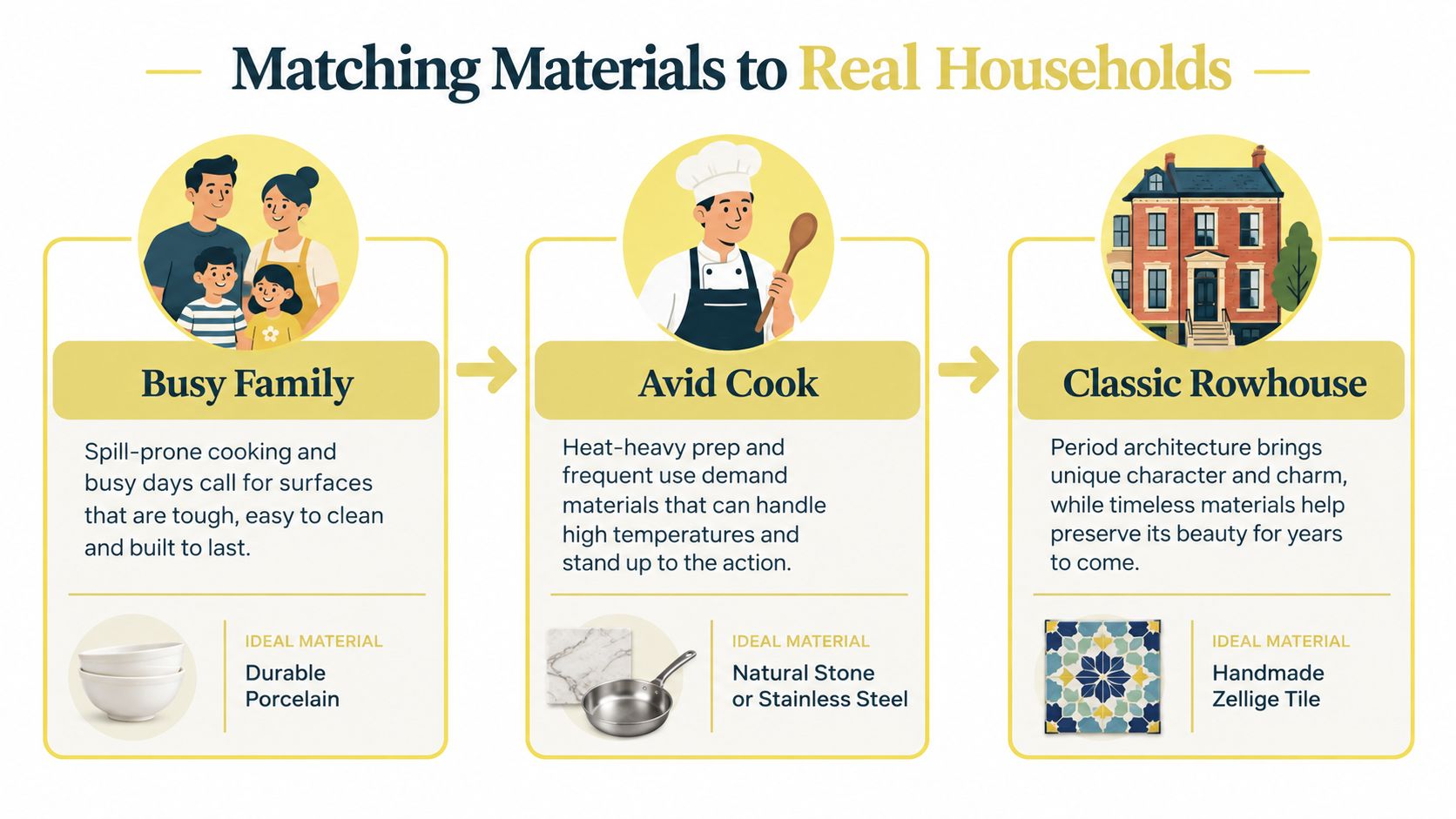
An avid cook may take a different path from all three. Stainless steel near a serious cooking zone offers heat resistance and straightforward sanitation, while porcelain provides a softer visual language without requiring sealing. The decision depends on whether the homeowner wants the backsplash to recede, contribute texture, or become a principal architectural feature.
What Installation Really Demands
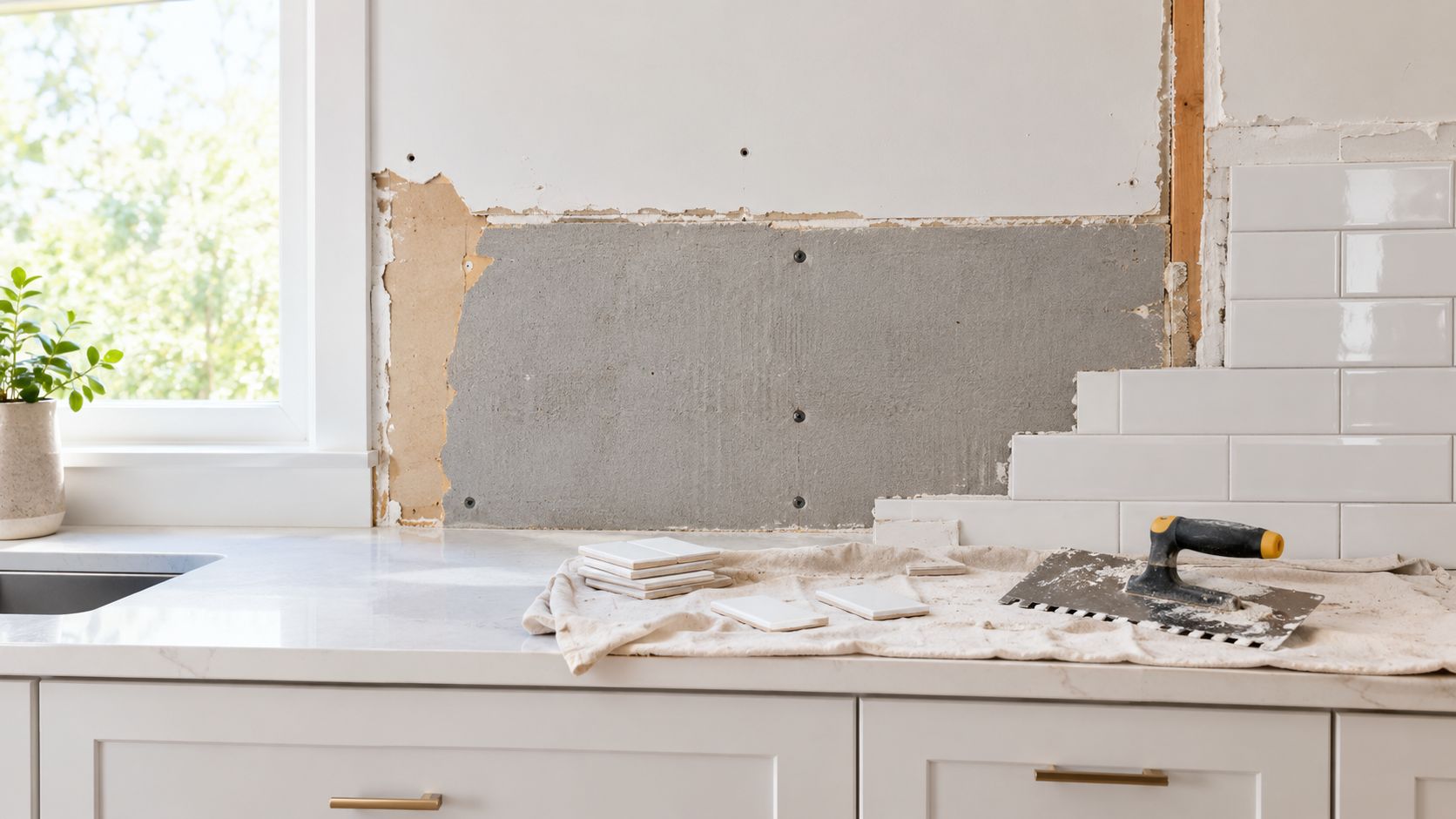
A backsplash can look simple on a plan and become complicated once the wall is opened. Ask the contractor to confirm the substrate before demo day. Sound drywall may support some installations, while cement board or another suitable backing may be needed in areas where moisture, weight, or product requirements call for it.
Plumbing walls sometimes need to be furred out so the finished tile meets the countertop cleanly. If that adjustment is missed, the backsplash can sit proud of the counter, create an awkward ledge, or force visible corrections at cabinets and trim.
Resolve edges, outlets, and light
Tile edges may use a standard miter, metal trim, stone trim, or a carefully aligned termination. Slab backsplashes require a separate conversation about the edge. A mitered edge creates a crisp folded corner, while a laminated quartz edge builds thickness by joining another piece beneath the surface.
Outlets, USB ports, and under-cabinet strips should be coordinated before the backsplash is set. A tile-ready junction box extender may be required to keep electrical devices flush and code compliant after the new surface changes the wall depth. Outlet placement also affects tile cuts and slab seams, so it shouldn't be treated as a final-detail decision.
Lighting needs its own sample review. High-gloss ceramic and glass can show hotspot glare under poorly aimed LEDs, while textured stone benefits from warmer illumination that brings out surface variation. A homeowner coordinating a larger remodel can also review project management considerations for a renovation before the installation sequence is finalized.
The schedule depends on material, site conditions, and layout. A tile installation may take two to five days, while slab fabrication and setting may occur in a single day, though templating and fabrication happen beforehand. Those durations are planning guides, not guarantees, and the contractor should confirm them after measuring the actual kitchen.
Here's a practical installation sequence to discuss:
- Verify the wall: Confirm flatness, backing, moisture conditions, and any required furring.
- Coordinate services: Set outlet locations, junction boxes, lighting, and plumbing before final measurements.
- Approve the layout: Review corners, seams, patterns, grout joints, and terminations with marked elevations.
- Confirm the finish: Examine the selected surface under the intended cabinet and under-cabinet lighting.
Choosing With Confidence
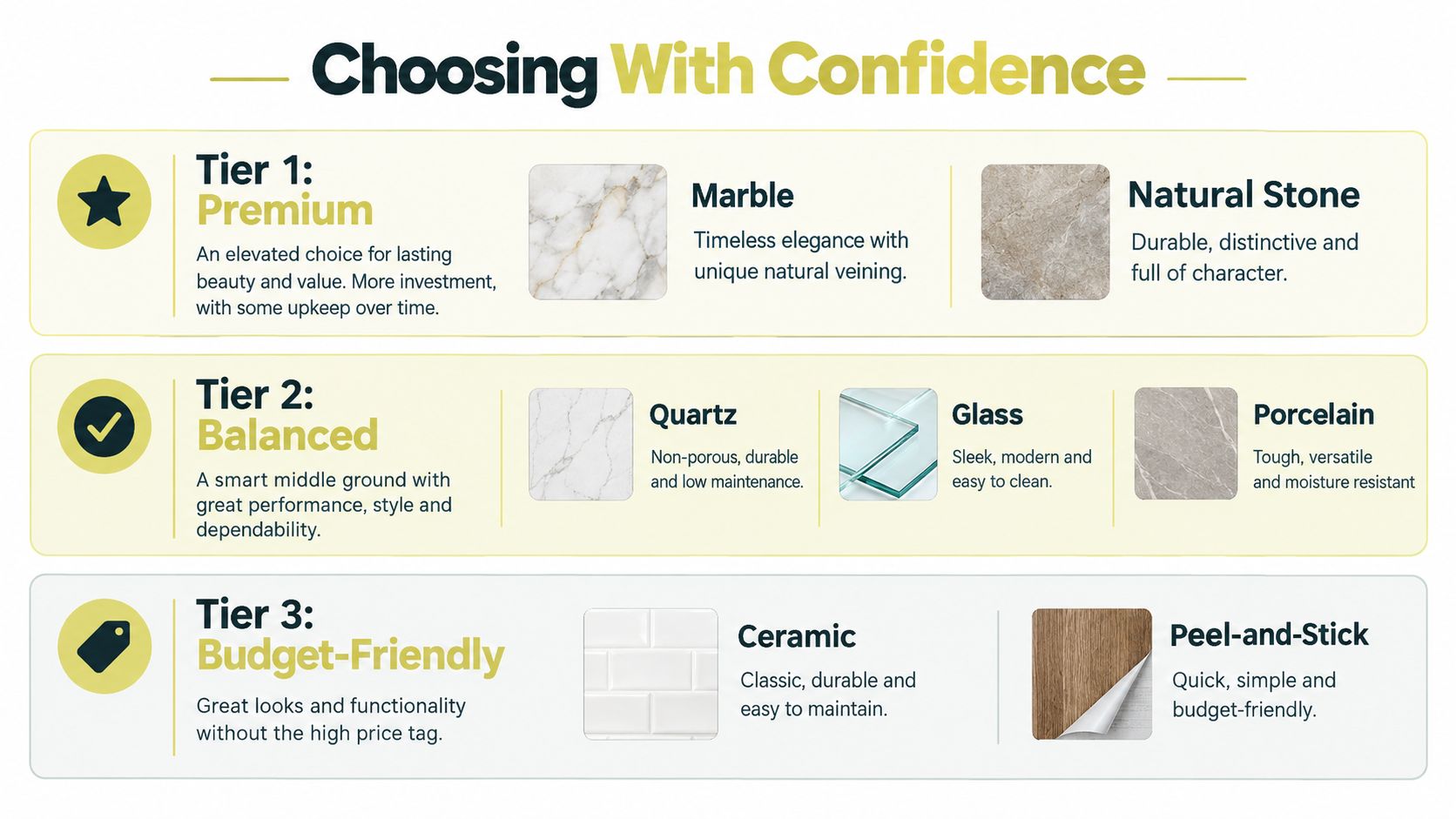
Sort the options by the kind of ownership they support.
- Long-term value: Porcelain and engineered quartz offer dependable performance with relatively low routine maintenance.
- Mid-life flexibility: Ceramic, glass, and selected natural stones provide design range, though grout or sealing becomes part of ownership.
- Short-term or rental use: Peel-and-stick vinyl can create a quick visual change, but it shouldn't be judged as a permanent substitute for a properly installed surface.
Before ordering samples, answer three questions. How often do you cook? Frequent cooking favors porcelain, quartz, or stainless steel near the most active zones. Does the wall include corners, windows, or many outlets? A tile layout may offer easier adjustment than a large slab. How long will you stay? A long-term home may justify a carefully fabricated slab or a stone whose maintenance you're prepared to accept.
Bring the cabinet door, countertop sample, grout options, and lighting information to a showroom wall. Color, reflectance, texture, and grout can read differently under 3000K versus 4000K lighting, and that change often matters more than a specification sheet. Jennifer Gilmer Kitchen & Bath can review the material, layout, lighting, and installation implications with homeowners planning projects in Washington, DC, Maryland, and Virginia.
Visit Jennifer Gilmer Kitchen & Bath to compare backsplash materials alongside cabinetry, countertops, lighting, and hardware in person. The firm's team can help develop a kitchen from concept through installation, with showroom consultations available in Chevy Chase, Easton, and Ashburn.